
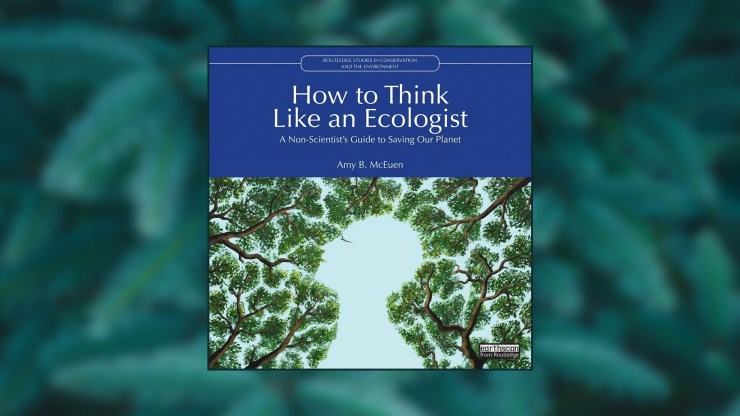
How do you tell solid science from something dressed up to look like it? Are we living through the sixth mass extinction? And why is the climate crisis not the worst of the planetary boundaries we have crossed? My guest today is Amy McEuen, a professor of Biology at the University of Illinois Springfield, where she has taught environmental biology, ecology and conservation biology for more than twenty years. Her book, ‘How to Think Like an Ecologist: A Non-Scientist’s Guide to Saving Our Planet’, is written for people without a science background and is laid out like a field guide, so you can read the chapters in any order you like. What caught my attention is that Amy spends the opening chapters on what science actually is and on how misinformation works before she gets anywhere near ecology. Our conversation follows much the same path.
We spend a fair bit of time on that groundwork because I think it matters a lot. Amy explains the difference between misinformation and disinformation, why fact checkers read laterally rather than arguing with an article line by line, and why prebunking works better than debunking. From there we move on to nature itself. If humans are part of nature, does the word still mean anything useful? Amy also argues that we get further by asking people what they value about a particular place than by asking them to defend nature in the abstract. We also pull apart the idea of a historical baseline, since choosing a date to restore the land to is a fairly arrogant thing to do and not much use when the whole global environment is shifting.
Then we get to the numbers. To qualify as a mass extinction, 75% of taxa have to disappear from the planet, and Amy explains why the honest answer to ‘are we in the sixth one?’ is both yes and no. We also talk some more about planetary boundaries and why biodiversity loss and novel entities such as plastics and synthetic chemicals are worse than climate change, even though climate takes up most of the oxygen in the room. We finish with talking about policy, paradigms and eco-anxiety. Is policy change enough on its own or does something have to shift in how we see the world? And how do you talk about any of this without either frightening people into switching off or offering false comfort?


Aimed at non-science students, this book demystifies the basic science of environmental global changes, from climate change to biodiversity loss, while tackling the natural constraints that shape our future. The book dives into the unique power of science as a tool for uncovering truths about the natural world and equips readers with strategies to spot and counter scientific misinformation.
Tommy’s Outdoors is a participant in the Amazon Services LLC Associates Program, an affiliate advertising program designed to provide a means for sites to earn advertising fees by advertising and linking to Amazon.co.uk
The guest featured in this episode paid a nominal guesting fee. This fee did not influence the content of the episode. The guest had no editorial control, did not review the episode before publication, and did not directly influence the questions asked during the interview.
Leave a Reply