
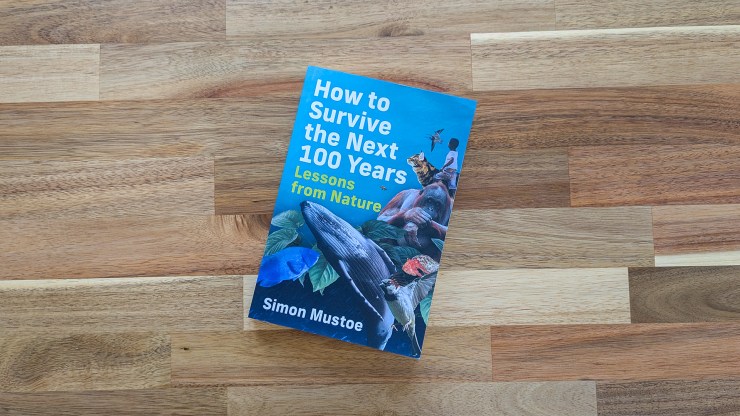
Why do we feel so hopeless about the future of the natural world? Is nature really collapsing everywhere we look or have we simply been told a one-sided story? And what if our lack of control over ecosystems turns out to be our greatest strength? In this episode I welcome back expert ecologist and author Simon Mustoe to talk about his new book, ‘How to Survive the Next 100 Years: Lessons from Nature’. It picks up where his previous book left off, building on the idea that we are not separate from nature but central to it. Simon explains how we sit right in the middle of the trophic pyramid and depend entirely on the animals around us to keep energy moving through the systems that sustain life. It is a perspective that quietly reframes how we think about our place on this thin, living veneer of the planet.
Much of our conversation focuses on balance, both in nature and in how we talk about it. Simon points to a reanalysis of the Living Planet Index suggesting the picture is closer to fifty-fifty than the widely reported three-quarters decline, with many animals, including large ones like humpback whales, recovering on their own. We get into why bad news spreads so easily while good news gets buried and how our understanding of the world often lags decades behind reality. From novel ecosystems and so-called invasive species to the misuse of words like ‘pest’ and ‘overabundance’, Simon makes the case for caution, humility and a kind of Hippocratic oath for conservation: first, do no harm. He argues that forcing outcomes rarely works, because the forces shaping ecosystems are far more powerful than we are.
We also explore why blanket solutions so often fail, using examples from Australian farming, koala conservation and a single burrowing animal that increased the profitability of a sheep farm. Simon believes communities, not top-down policy, hold the key to lasting change, and that real progress comes from enabling people to act locally rather than shouting at politicians or each other. He leaves us with simple, practical advice: get outside, pay attention to the nature on your own doorstep, support what others are doing nearby, and step back from the relentless flow of negative news. It is a refreshingly balanced, middle-of-the-road conversation that gives you something rare these days, a genuine sense of agency.

Described as ‘the perfect antidote to feeling helpless in the face of seemingly unstoppable global events’ (Dr Jen Bowden, Curtin University), How to Survive the Next 100 Years: Lessons from Nature will teach you how to consume a more balanced variety of knowledge to become healthier and happier by reconnecting with nature.
Tommy’s Outdoors is a participant in the Amazon Services LLC Associates Program, an affiliate advertising program designed to provide a means for sites to earn advertising fees by advertising and linking to Amazon.co.uk
The guest featured in this episode paid a nominal guesting fee. This fee did not influence the content of the episode. The guest had no editorial control, did not review the episode before publication, and did not directly influence the questions asked during the interview.
Leave a Reply