
Scotland’s salmon farming industry aims to double its production to 300,000-400,000 tonnes by 2030. This ambitious target comes despite a 2018 parliamentary inquiry concluding that expansion shouldn’t proceed until environmental and welfare issues are addressed. As we examine the industry more closely, the problems become increasingly apparent, and they’re far more serious than most consumers realise.
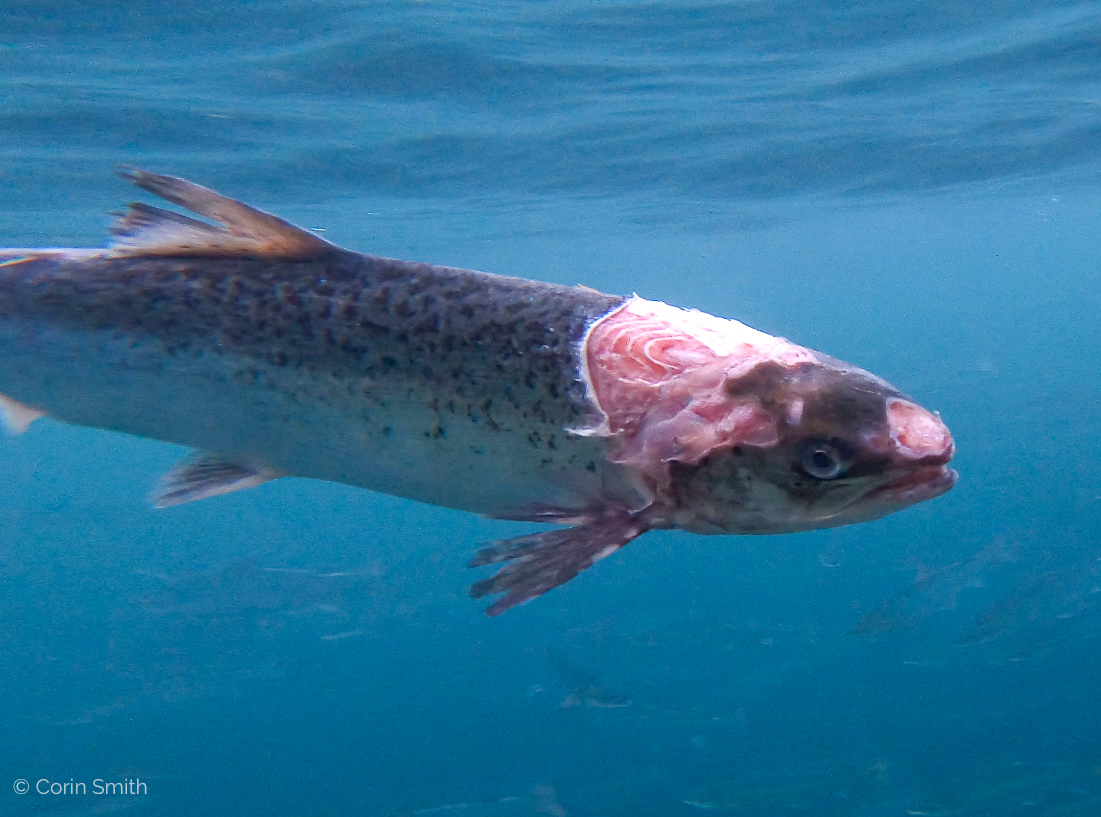
In Scottish salmon farms, 25% of fish die before harvest. This staggering mortality rate would be unacceptable in any other farming sector, yet it continues year after year. The industry holds the dubious distinction of being the least compliant of all industries regulated by the Scottish Environment Protection Agency (SEPA) and ranks as the most polluting of Scotland’s seas. During warm-water periods, some farms report losing 30-40% of their stock in a single month due to a lethal combination of warm waters and jellyfish blooms, with dead fish being transported away in tanker loads to be processed in anaerobic digesters. It is often said that if any land-based farm operated with such mortality rates and environmental impacts, it would be shut down within 24 hours. Unfortunately, what happens in aquaculture is literally hidden underwater.
To learn more about the environmental and societal impacts of salmon farming, listen to the full episode of my podcast.
One of the most pressing issues is the spread of sea lice from farms to wild salmon populations. These parasites can travel up to 30km from farms, devastating wild populations along the way. When small wild salmon carry more than two lice, there’s a 30% likelihood of death. The problem is so severe that farms must regularly treat fish with pesticides or use physical treatments, including pushing them through heated water or mechanical removal systems. Some farms attempt to control lice by introducing ‘cleaner fish’ – a wild-caught wrasse and lumpfish that eat the parasites. However, these cleaner fish are typically culled after each production cycle, adding another layer of ethical and environmental concerns to the industry’s practices.
The welfare issues extend far beyond sea lice infestations. Farmed salmon are grown so rapidly that their spines often become distorted and they develop cataracts – a fact acknowledged deep within the companies’ own annual reports. The fish are kept in crowded conditions, making them susceptible to diseases and parasites. When farms need to treat the fish for sea lice, they’re forced through stressful delousing procedures that can be fatal, especially if the fish are already weakened by poor gill health or other conditions.
The feed used in salmon farming raises serious sustainability questions that extend far beyond the immediate environment of the farms. The industry relies on soya from deforested areas in Brazil, wild-caught fish from Peru and West Africa, and even Antarctic krill – disrupting marine food chains in some of the world’s most sensitive ecosystems. The process is remarkably inefficient – it takes multiple kilograms of wild fish to produce just one kilogram of farmed salmon. Furthermore, about a third of the harvest is air-freighted to the Far East and America, significantly impacting the industry’s carbon footprint. While the percentage of wild fish in feed has decreased over time, the total volume used continues to rise as the industry expands.
The impact of escaped farmed salmon on wild populations represents another significant concern. About a quarter of wild Scottish salmon now carry genes from escaped Norwegian farmed salmon, potentially weakening the genetic resilience of wild populations. These aren’t small-scale incidents – in one event alone, 50,000 farmed fish escaped during a 2020 storm at a single facility. The escaped fish, bred for rapid growth rather than survival in the wild, can interbreed with wild salmon, potentially compromising the genetics that have evolved over thousands of years to suit local conditions.
The Scottish salmon farming industry is now dominated by Norwegian, Faroese and Canadian multinational companies, with no large British-owned salmon farming companies remaining. These international corporations operate farms across multiple countries, from Chile to Iceland, often playing regions against each other when faced with stricter regulations. For instance, when Norway proposed a 40% marine resources tax on fish farms, companies threatened to move operations to countries with looser regulations – a clear indication that profit takes precedence over environmental responsibility.
Several countries are taking decisive action against open-net salmon farming, recognizing the environmental damage it causes. Washington State has banned it entirely, while British Columbia is removing farms from the sea. Both Argentina and the Falklands have rejected salmon farming proposals outright. In regions where farms have been removed, there’s evidence of immediate positive impacts on wild salmon populations, with reduced sea lice infestations on migrating wild fish.
Looking to the future, the industry requires fundamental reform if it’s to become truly sustainable. While land-based closed containment systems offer one potential solution, they come with their own challenges, including higher energy requirements and substantial land use. What’s clear is that the current model of open-net farming in marine environments is causing unsustainable damage to both wild salmon populations and the broader marine ecosystem. For consumers, the most immediate action is to reconsider farmed salmon consumption until the industry addresses these fundamental issues. The environmental and welfare costs of current farming practices suggest that cheap salmon comes at a price we cannot afford to pay.
Photos supplied by and courtesy of Corin Smith. Copyright Corin Smith.
The article was created with the assistance of an AI, based on the episode of my podcast titled “Salmon Farming Exposed: Environmental Catastrophe and Community Impact”.

 Tommy's Outdoors