212: Snow Leopard Trail with Jonny Hanson

A dramatic mountain valley landscape showing snow-capped Himalayan peaks in the background with a glacial river winding through a broad valley floor below, surrounded by steep, barren mountainsides covered in sparse vegetation.

https://open.spotify.com/episode/1HY2nv8B4dKyOCgLX9k09u Can communities in Ireland and Britain learn to share landscapes with apex predators again after centuries of their absence? What does coexistence actually look like when people, livestock, and large carnivores occupy the same territory? How might wisdom from Himalayan communities inform debates about lynx reintroduction closer to home? https://www.youtube.com/watch?v=PmNmi-ZW6Hw Our conversation takes us … Continue reading 212: Snow Leopard Trail with Jonny Hanson

211: When Reintroductions Cause De-wilding with Alex Lees

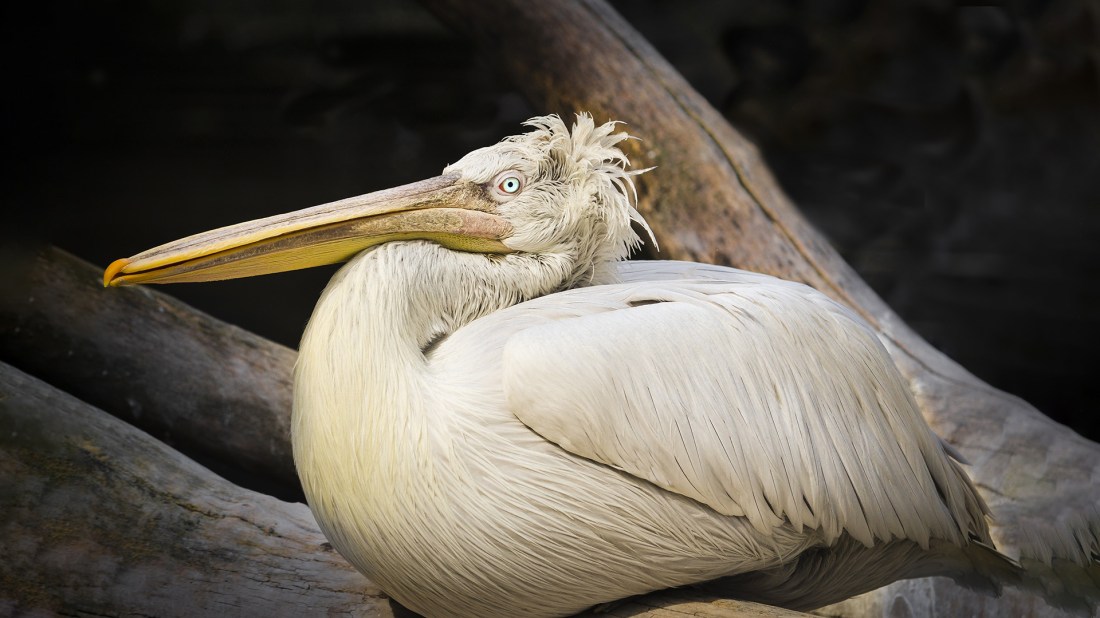
A large pelican with distinctive dishevelled, cream-coloured plumage rests on weathered wooden logs. The bird displays its characteristic enormous pale yellow bill and bright orange eyes, with wispy feathers creating an almost comical 'bad hair day' appearance atop its head. The pelican's posture is relaxed as it sits amongst the timber, with its substantial body and wings folded naturally. The wooden logs show signs of age and weathering, creating interesting textures and lines that frame the bird. The background is softly blurred in dark tones, making the pale pelican stand out prominently in the composition.

https://open.spotify.com/episode/6mrrImy0I4FvZqKCVVb5zP Can species reintroductions harm biodiversity rather than help it? Why might bringing back wolves or lynx create more problems than solutions? Are we using reintroductions as a distraction from the real drivers of our nature crisis? In conversation with Alex Lees, Reader at Manchester Metropolitan University, we explore these questions and cut through popular … Continue reading 211: When Reintroductions Cause De-wilding with Alex Lees

210: The Culling Conundrum with Ryan Davy

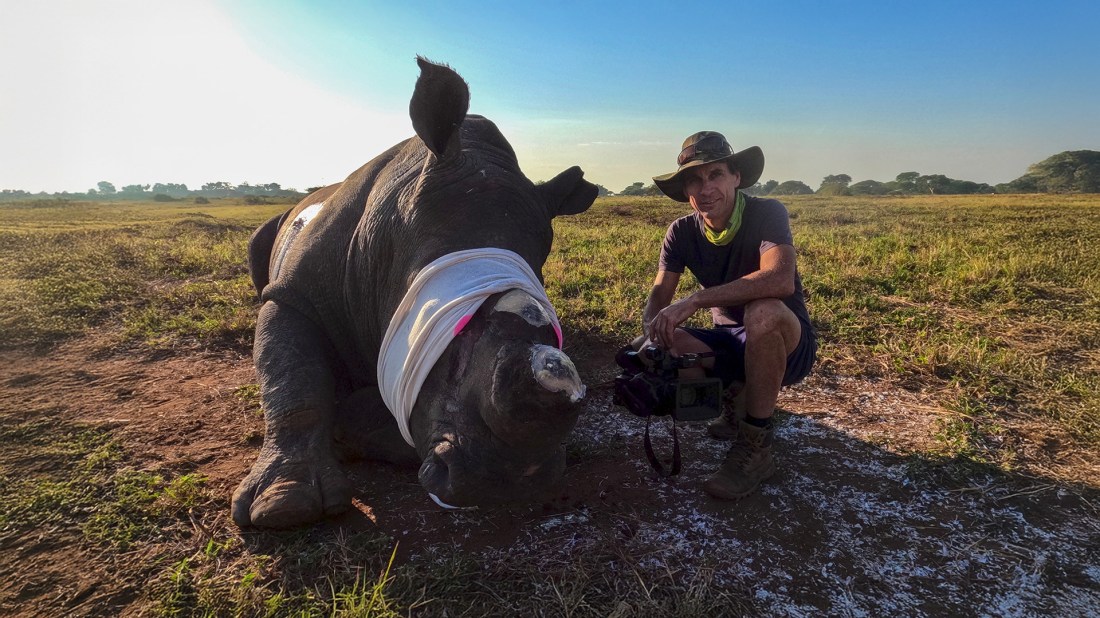
A wildlife researcher or veterinarian kneels beside a sedated rhinoceros in an African savanna setting. The rhino is lying on its side with white bandaging wrapped around its head area where its horns have been removed as part of anti-poaching conservation efforts. The person, wearing a wide-brimmed hat, dark shirt, and shorts, appears to be monitoring the animal during the dehorning procedure. The scene takes place during golden hour with expansive grasslands stretching to the horizon under a partly cloudy sky, creating a dramatic backdrop for this crucial wildlife conservation work aimed at protecting rhinos from poachers.

https://open.spotify.com/episode/4lQrHB9lkIWzArwCA6h2Qc Why are elephants dying slow deaths from starvation in African parks? Can contraceptives really solve wildlife overpopulation in fenced reserves? What happens when international animal rights organisations influence conservation decisions from thousands of miles away? These are the uncomfortable questions at the heart of one of conservation's most contentious debates. https://www.youtube.com/watch?v=8BCi3d_eWH4 Ryan Davy spent … Continue reading 210: The Culling Conundrum with Ryan Davy

204: The Elephant Translocation Disaster with Jens Ulrik Hรธgh

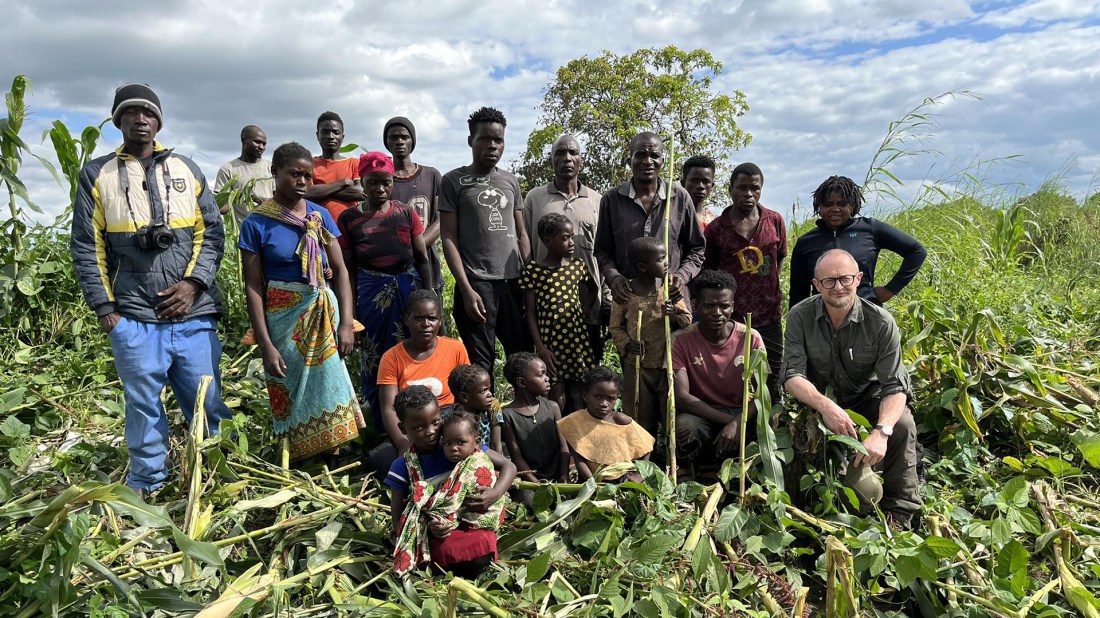
A group photo of approximately 20 Black people from a rural African community, including adults and children, standing and sitting together in a lush agricultural field. The group appears to be a farming community, with people of various ages wearing casual clothing in bright colours including orange, blue, yellow, and traditional patterned fabrics. In the foreground and surrounding the group are green crops including what appears to be maize plants and other vegetables. The setting suggests a rural farming area with rich, fertile soil. On the right side of the group stands a white journalist with glasses wearing olive-green clothing. The sky overhead is partly cloudy, and there are trees visible in the background. The image captures what appears to be a community gathering or visit to showcase local agricultural work.

https://open.spotify.com/episode/7M2rtUYPfW5shNdwOgzjTb How does a wealthy animal welfare organisation, funded by well-meaning donors from Europe and North America, end up relocating hundreds of elephants to an area where some of the world's poorest people live? What happens when two people are killed within 24 hours of the first four elephants arriving, yet the organisation presses on … Continue reading 204: The Elephant Translocation Disaster with Jens Ulrik Hรธgh

198: Living with Wolves – The Complete Guide to Coexistence

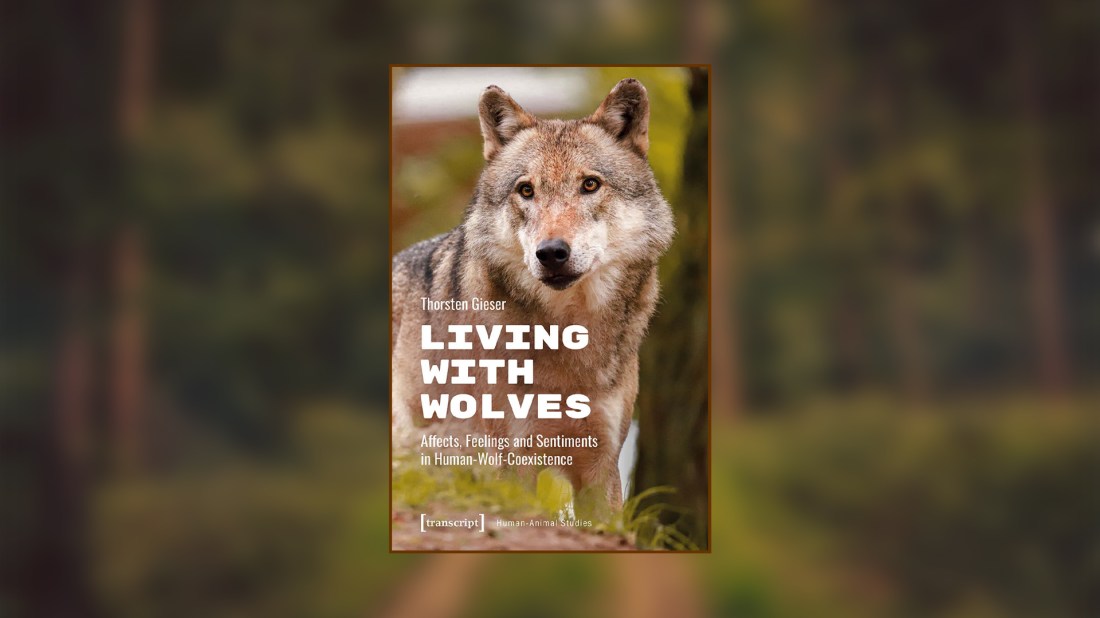
The image shows a book cover titled "LIVING WITH WOLVES" by Thorsten Gieser. The cover features a close-up photograph of a grey wolf with amber eyes looking directly at the camera against a blurred natural background. The subtitle reads "Affects, Feelings and Sentiments in Human-Wolf-Coexistence" and the book appears to be published by Transcript in their Human-Animal Studies series.

https://open.spotify.com/episode/02cT5I7h7A5Q8uNWCPL3LX I feel like this episode is the ultimate guide to understanding coexistence with wolves. Once again I talk with ecological anthropologist Thorsten Gieser, this time about his excellent book โ€œLiving with Wolves: Affects, Feelings and Sentiments in Human-Wolf Coexistenceโ€. In the episode, Thorsten recounts a tense atmosphere during the visit to a wolf kill … Continue reading 198: Living with Wolves – The Complete Guide to Coexistence

197: Living with Lynx – Conversation with Jonny Hanson

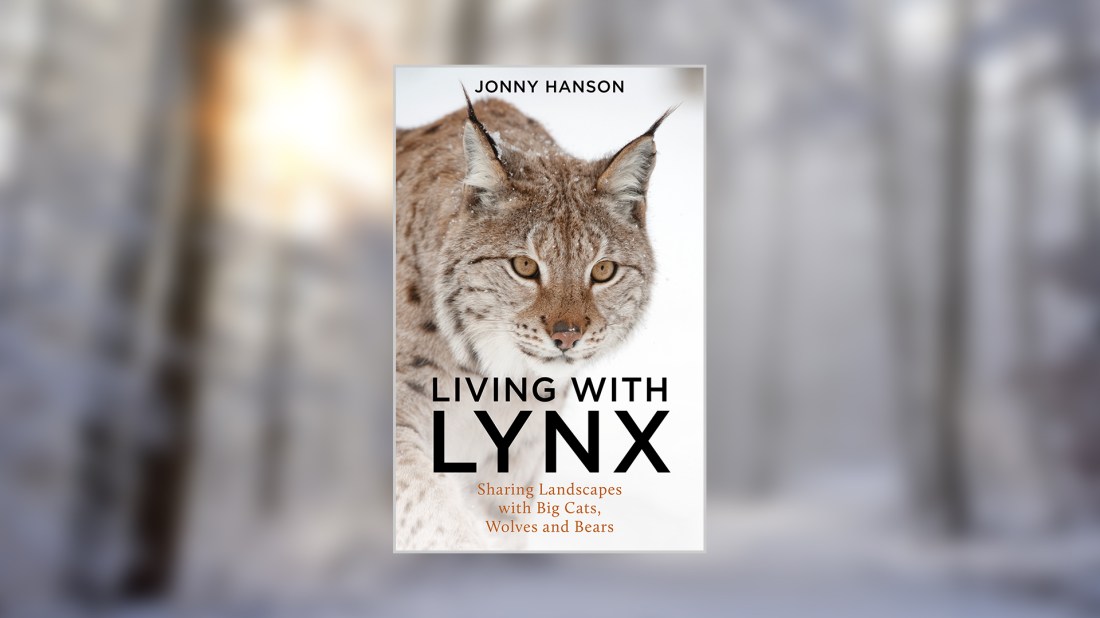
This image shows a book cover titled "LIVING WITH LYNX" by Jonny Hanson. The cover features a close-up photograph of a lynx's face, showcasing its distinctive tufted ears, facial markings, and amber eyes. Below the main title is the subtitle "Sharing Landscapes with Big Cats, Wolves and Bears". The background appears to be a blurred winter or snowy landscape, emphasising the natural habitat of these animals. The cover uses a clean, modern typography with the author's name at the top and the title prominently displayed in large black letters across the middle of the image.

https://open.spotify.com/episode/5eSwvZrhlgfkjNX9bIm5Ds Is it possible for humans and large carnivores to share landscapes without conflict? What happens when predators like wolves, bears, and lynx return to areas where they've been absent for centuries? How do we balance the ecological benefits of apex predators with the real concerns of rural communities and farmers? Weโ€™re trying to answer … Continue reading 197: Living with Lynx – Conversation with Jonny Hanson

196: Offshore Wind and Marine Mammals with Stephen Comerford

The image shows an offshore wind farm with multiple white wind turbines arranged in a line across the horizon. The turbines are installed in the sea, with their bases partially submerged in the grey-blue water. The sky above is overcast with a light grey cloud cover, creating a moody atmosphere. Each turbine has three blades and appears to be of significant size, standing tall above the water's surface. The turbines are evenly spaced and extend across the entire width of the frame, demonstrating the scale of the offshore wind energy installation. Image by Julia Schwab from Pixabay

https://open.spotify.com/episode/4w1wJAISQyArnmmUCCOMOX Are offshore wind farms detrimental to marine mammals? What happens when we industrialise our seas with massive turbines? Can we balance the urgent need for renewable energy with protecting marine life? These questions take centre stage in our conversation with marine ecologist Dr Stephen Comerford, who is the ORE Marine Biodiversity Officer at the … Continue reading 196: Offshore Wind and Marine Mammals with Stephen Comerford

194: Pink Salmon Invasion on Norwegian Rivers with Jude Isabella

A rocky river with small waterfalls flowing through an autumn landscape in Finnmark, Norway. The scene is framed by birch trees with golden-yellow leaves, whilst rugged mountains form the backdrop. The river cascades over dark bedrock, creating white rapids. Photo by Arvid Hรธidahl on Unsplash.

https://open.spotify.com/episode/42CLzA0rIjVKUvpE27eTPf What happens when Pacific salmon invade Atlantic waters? How does a Soviet-era experiment from the 1950s continue to impact Norwegian rivers today? Weโ€™re answering these questions in conversation with Jude Isabella, founder and editor-in-chief of Hakai Magazine, and author of multiple books including Salmon: A Scientific Memoir. This episode was inspired by her three-week … Continue reading 194: Pink Salmon Invasion on Norwegian Rivers with Jude Isabella

193: Human-Wildlife Conflict – Romanian Bears and African Elephants with Jens Ulrik Hรธgh

Bear on the side of the road at the Transfagarasan road in Arges county, Romania. Photo by Fermoar.ro on Unsplash

https://open.spotify.com/episode/2OI5ygBsMnCQZUFjNAhnIe Can hunting be an effective way to manage human-wildlife conflict? What happens when well-intentioned wildlife protection measures backfire? I spoke with Jens Ulrik Hรธgh, a Scandinavian hunting journalist, to find answers to these questions through the lens of Romania's bear management crisis. When hunting was banned in 2016 under pressure from animal rights groups, … Continue reading 193: Human-Wildlife Conflict – Romanian Bears and African Elephants with Jens Ulrik Hรธgh

Let’s Talk About Europe’s Wolf Protection Laws

A dramatic digital artwork depicting five snarling wolves with bared teeth, shown in close-up against a dark, moody background. The wolves have detailed fur rendered in golden-brown and white tones. They appear to be confronting each other aggressively, with their paws extended and bodies positioned on what appears to be gnarled tree branches. The lighting creates a theatrical, Renaissance-style atmosphere with golden highlights contrasting against shadowy areas.

As you may have heard, the Standing Committee of the Berne Convention (an international legal instrument for nature conservation) decided to lower the protection status of wolves. This opens the way to lower their protection status across the EU through the Habitats Directive. The move had been on the cards for over a year, and … Continue reading Let’s Talk About Europe’s Wolf Protection Laws