
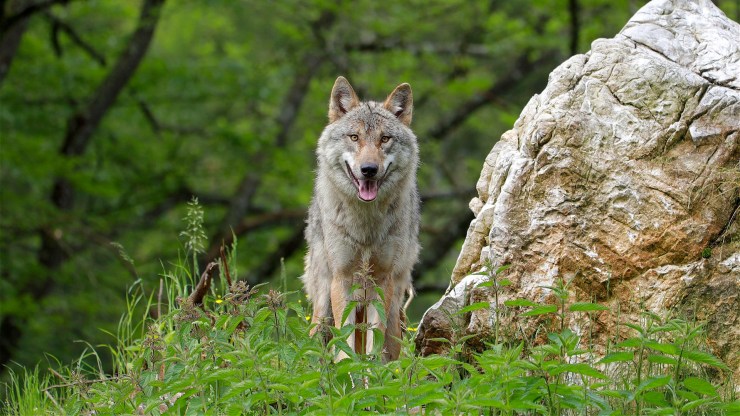
How many wolves is enough? Is that even the right question to ask? And will the recent lowering of wolf protection status in the EU actually reduce the conflict between wolves and people? These are some of the questions we tackle in this episode. After the previous wolf episode generated a lot of feedback, including detailed emails from scientists, one of those scientists is our guest today. Joachim Mergeay is a senior researcher at the Research Institute for Nature and Forest in Belgium, an associate professor of conservation genetics at Leuven University, Flanders, and a member of the IUCN Large Carnivore Initiative for Europe. He reached out after listening to the podcast and I was immediately interested in his deeper perspective on wolf coexistence in Europe.
During our conversation, Joachim makes a compelling case that if we solve the conflict, the number of wolves becomes far less important. He shares practical examples from Belgium where electric fencing, supported by volunteer teams and full subsidies for farmers, has virtually eliminated livestock predation in some wolf territories. We also discuss why shooting wolves, even under the new lowered protection status, is unlikely to meaningfully reduce conflict because the requirement to maintain favourable conservation status leaves very little room for lethal management. Joachim is clear that he is not against hunting in principle but stresses that we need to be honest about the goals behind it.
We also get into the broader picture of rural abandonment, shifting baselines and the urban-rural divide. Joachim challenges the assumption that rural and urban people are worlds apart in their attitudes towards wolves, pointing to research showing the differences are smaller than most of us think. He also offers an optimistic observation about shifting baselines working in the opposite direction for once, with children growing up in countries where wolves are simply part of the landscape. We finish with a look at how European-level policy can work alongside local solutions and what the future might hold for wolf populations across the continent.
Leave a Reply