
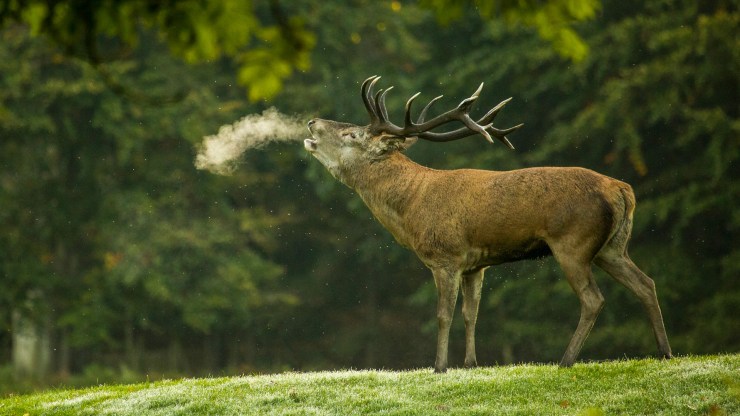
Why are red deer populations in Germany growing in number and antler size yet sitting in deep genetic trouble? What is the difference between census population size and effective population size, and why does it matter? And how can a satirical award for the worst-built wildlife crossing draw attention to the issue of habitat fragmentation? In this episode, I sit down with Frank Zabel, a wildlife biologist, campaigner, and co-host of the award-winning JAGDcast podcast. Frank also runs the nonprofit RotWildes Deutschland (Non-profit Society for Wildlife Biology & Sustainable Use) and authored the 2022 deer management plan focused on corridors and mapping. Although Frank is speaking from Germany, many of the issues he raises will feel familiar to anyone interested in deer management, habitat connectivity, and how policy decisions made decades ago continue to shape what happens on the ground today.
Frank takes a broader view of red deer as an umbrella species, using them as a vehicle to talk about biodiversity in general. We discuss the historic genetic bottleneck created when red deer were extirpated in much of Germany after the 1848 revolution and how that legacy still shapes populations today. Frank explains why most German red deer populations now sit dangerously close to or below the threshold where the issues with inbreeding start to appear, even though the absolute numbers look healthy on paper. Our conversation also covers the red deer management areas in southern Germany, where deer must be shot once they leave designated zones, a policy decision rooted in post-war food production priorities that has become, in Frank’s words, a far more effective form of habitat fragmentation than any motorway.
We then shift gears to the lowering of the wolf’s protection status in the EU. Frank offers a perspective that may surprise some listeners, particularly those who expect hunters to take a predictable line on the wolf question. He also makes a compelling case for why looking at wolves across the whole of Europe through a single lens misses what is actually happening on the ground in different regions. We touch on what hunters need to do when wolves return to an area, and Frank shares an observation from his time in Sweden that illustrates the point well. This is a rich conversation packed with wisdom and insight.
Leave a Reply